

Get your page titles right and Google and AI search have a reason to cite you. The 2026 rule: one H1 per page, carrying the words your customers actually search, in natural language. Use H2 and H3 for subheads, and let the body copy carry everything else. Google has confirmed that AI Overviews and AI Mode need no extra structured data or special files — good SEO is good GEO.
In 2026, Why Do Titles Decide Citations More Than Body Copy?
At Google I/O in May 2026, Google reported roughly 1 billion monthly AI Mode users, with AI Overviews answering directly above many informational queries. Pew Research measured the effect: when an AI summary appears, about 8% of users click a traditional result; without one, about 15%.
That magnifies the role of the title. AI has to decide what a page is about before it summarizes it, and the cheapest signal is the H1 and the subheads beneath it. An Ahrefs study from March 2026 found that only 37.9% of URLs cited in AI Overviews also ranked in the top 10 for that query (about 76% in July 2025), and another 31% ranked outside the top 100.
Rankings haven't changed — the results page has. AI simply summarizes pages that already rank. Your job is a title that says “here's the problem this page solves” in three seconds. Queries with an AI Overview see about a 34.5% drop in clicks on the first result, so the title also has to give people a reason to click through.
What Do H1, H2 and H3 Each Handle? One Table Explains It
Tags descend in importance: H1 carries the most weight, H6 the least. On a typical foreign-trade site, the division of labor looks like the table below.
| Tag | Role | Suggested uses per page | Example for a trade site |
|---|---|---|---|
| H1 | Page topic, highest weight | 1 | Silicone Kitchenware OEM Factory |
| H2 | Main body sections | 3–7 | MOQ & Lead Time |
| H3 | Sub-questions inside a section | As needed, never more than your H2 count | Can You Print Our Logo? |
| H4–H6 | Deeper levels in long posts and spec tables | Avoid if you can | Packaging Options |
The examples are structural only — swap in the words your buyers actually search. Put the product term first and the modifier after: Stainless Steel Water Bottle OEM, not a word-for-word carryover like OEM Stainless Steel Bottle.
Titles help algorithms understand the page, but ranking still depends on content depth and backlink foundations. For the link side, see the ultimate guide to English backlinks for foreign trade. One practical check: list every page's H1 on its own and see whether you can tell at a glance what it sells and who it sells to. If you can't, rewrite it.
How Should You Write Titles for Product Pages and Homepages?
Say “who you are + what you solve” within the first three seconds — the same rule applies to titles. For the homepage H1, use factory positioning + core category + target buyer, e.g. Silicone Kitchenware OEM Factory for European Retailers. Far more effective than Welcome to Our Company.
- Start by listing the five long-tail phrases customers type into Google — not your internal product names.
- Put one primary term in the H1 and the rest in your H2s.
- On product pages, put the spec table and MOQ right after the H1. Don't make buyers scroll three screens to find your minimum order.
- Make every H2 answer a real question: lead time, certifications, packaging, after-sales.
- When you're done, compare against competitors' title structures and see which information point you're missing.
Copy the structure from competitors; never copy the words. For the specifics, see improving your own site by analyzing competitor websites. If you need title drafts in bulk and want prompts that hit the point, see tips and cautions for writing articles and product descriptions with ChatGPT.
If site traffic has sat at zero for months, titles are rarely the only problem. Check indexing and crawling first, then read why your foreign trade site gets no traffic or inquiries. If you want to get the site skeleton right first, work through the structure checklist in B2B foreign trade websites.
How Many H1s Can One Page Actually Have?
One. Overusing them dilutes the importance of each — if everything is an H1, then by definition nothing stands out. Use one H1 for the main title, then H2 and H3 for subheads.
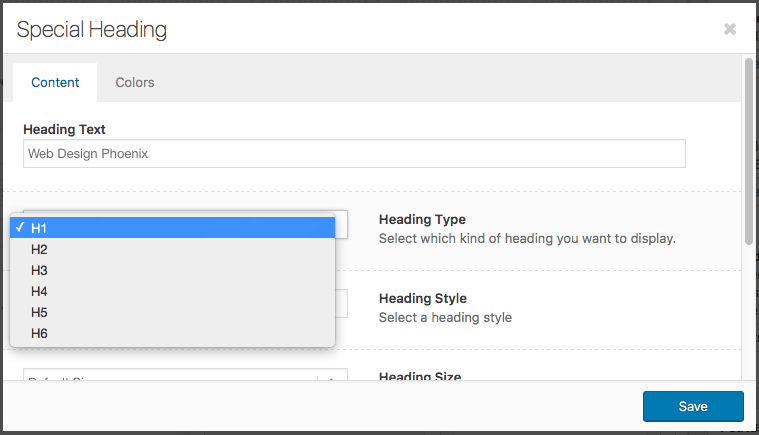
The most common real-world mistake: the template already outputs the page title as an H1, and the editor types a second H1 into the body. In the WordPress block editor the heading block defaults to H2, so you have to switch levels manually; with page builders, the theme's title module usually occupies the H1 already.
Two ways to check: view source in the browser and search for the h1 tag, or export the H1 count and length for every page with a crawler. An H1 over 25 words is keyword stuffing — rewriting is faster than patching.
After the Title Rewrite, What Technical Details Still Hold You Back?
Titles decide whether you get picked; speed and stability decide whether visitors stay. When mobile load time passes three seconds, about 53% of users leave outright.
CLS is the easiest to fix: hard-code width and height on every image so the page doesn't jump while loading. Keep LCP under 2.5 seconds — the hero image must be an img tag with the fetchpriority attribute, never a CSS background image. The browser only discovers a background image after parsing the CSS, and LCP pays for it.
Keep INP under 200 milliseconds. Third-party scripts are the biggest killer: GA4, Meta Pixel, TikTok Pixel, live chat, pop-ups. The usual fix is to defer them until the user's first interaction (touchstart, mousemove, keydown, scroll).
Don't check results right away. Core Web Vitals uses a 28-day rolling window of real user data, so allow four weeks before changes show in Search Console. By August 31, 2026, the “Search generative AI” toggle in Search Console rolls out to everyone and is set to include by default — watch your AI performance there.
FAQ
Do page titles have to contain keywords?
Yes, but naturally. Put one primary keyword in the H1 and make it read like human speech; cramming in three or four only hurts credibility. Google understands synonyms now, so you don't need every variant to appear.
Is the H1 the same thing as the title tag?
No. The title tag shows in the browser tab and the headline row of your search result; the H1 shows at the top of the page body. They can differ, but they must point at the same topic — don't sell a product in one and tell company history in the other.
What if rankings drop after I change the title?
First check whether you also changed URLs or deleted content. If you only changed the title, wait two to four weeks for the data to settle. In the meantime, compare impressions and CTR in Search Console: if impressions hold and CTR falls, the title isn't compelling enough — the keyword choice isn't the problem.
Should a foreign-trade site use Chinese or English in titles?
Any page aimed at overseas buyers uses the target market's language. An English site stays English throughout, including H1s, H2s and image alt text. Keep Chinese for backend notes and internal documents.