

Bottom line first: email finder software still works in 2026, but its role has changed. It is now a lead-list tool. It does one thing — pulls the emails that are publicly visible in Google search results. The average B2B cold email reply rate is just 1%–5%. A tight list plus short copy can reach 8%–15%. The gap is not the tool. It is the list and the copy.
What Emails Does This Software Actually Collect?
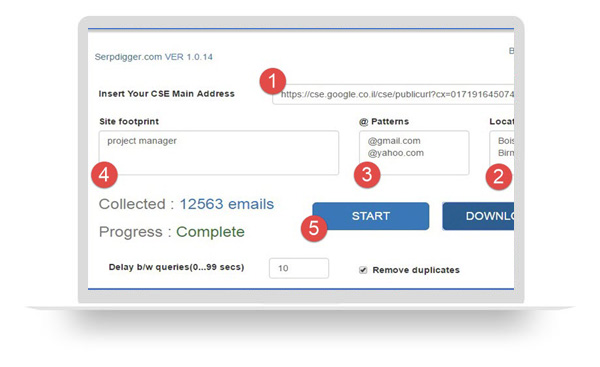
The logic is simple. You search by keyword and the tool extracts the email addresses that appear on Google results pages. Facebook, Twitter, LinkedIn, Instagram and Pinterest public pages often show business emails — profile bios, About pages, post signatures. In theory, if a page is indexed by Google and the email appears as plain text or a mailto link, it can be captured.
It is a browser extension, not desktop software. It has to run in Chrome, so users in mainland China must sort out network access first. The original offer: one purchase, lifetime free upgrades, $66 list price, ¥66 discounted, limited to site-building customers.
Know the limits too. It only collects, it never sends. Emails hidden behind a contact form cannot be captured. And prospects who live on WhatsApp or on-site chat will not leave an email at all. For social-channel lead gen details, work through 7 common social media marketing mistakes to avoid.
Keywords, Region, Email Type: How to Fill the Four Settings
Same tool, two people, and the list quality can differ tenfold. It all comes down to parameters. The table below covers the four common settings and what each one changes.
| Setting | Recommended input | Impact on results |
|---|---|---|
| Keywords | Product term + industry term + email suffix, e.g. valve supplier Germany "@gmail.com" | Narrower keywords mean a more relevant list, but a smaller one |
| Region | Tick only target-market countries or cities | Filters out leads outside your target market |
| Email type | Prioritize company-domain emails; group free mailboxes separately | Company domains reply at clearly higher rates than free mailboxes |
| Volume per run | Start small and check quality before scaling up | Too many requests triggers Google captchas and slows you down |
One easily missed point: put the email suffix in the keyword. Adding "@gmail.com" versus a company domain suffix produces completely different lists. The first looks more like end-user retail inquiries; the second looks more like purchasing decision-makers.
How Many Per Day? It Comes Down to Three Variables
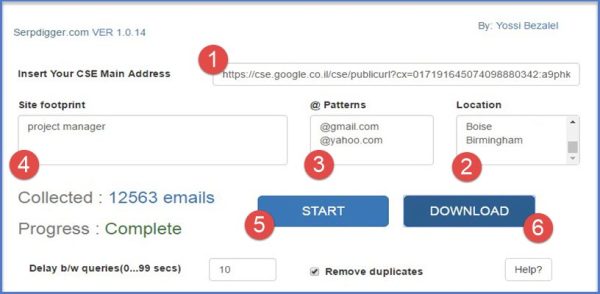
The original says tens of thousands a day is no problem, and that figure holds under ideal conditions. In practice, volume depends on three things: how many pages your keywords cover, network stability, and how hard Google is fighting scrapers. Broader keywords mean more results — and more junk.
A steadier approach is to split your runs: one product term paired with one country per round, then switch the combination. Before using a list, do three things — dedupe, strip the fake emails that are really image filenames, and spot-check that the domains exist. That half hour saves you hundreds of wasted sends later.
How to Write the First Email to a Scraped Address
A list is just raw material. Same list, different copy, and reply rates can differ threefold or more. Work in this order:
- Segment first. Split by country, product line and email type into three groups. Never blast them all together.
- Put one thing in the subject line: the specific problem you can solve. No full company name, no promotion.
- Keep the body to 80–120 words. The first sentence says who you are and what you solve. Past three sentences, they stop reading.
- Ask one question per email. "Want a quote sheet?" gets far more replies than "What are your needs?"
- No attachments on the first email, and no more than one link.
- Set up SPF, DKIM and DMARC on your sending domain, and warm up a new domain with small batches for two weeks.
- Stop once the bounce rate passes 5%. Audit the list before sending again.
If the copy will not flow, see 54 best ChatGPT writing prompts for website content marketers and have it expand one line of product value into three subject-line variants for A/B testing.
AI Search Interception in 2026: How to Adjust Your Cadence
Google I/O 2026 (May) reported AI Mode at roughly 1 billion monthly users, with AI Overviews answering directly above many informational queries. Pew Research measured it: when an AI summary appears, about 8% of users click a traditional result, versus about 15% without one. Ahrefs data is blunter — queries with AI Overviews see roughly a 34.5% drop in click-through rate on the top result.
That does not mean Google search stops working for lead gen. The entry point just got narrower. Buyers still search, but the answer is summarized up front. To get summarized, your pages must be crawlable and indexable, not blocked by nosnippet or max-snippet. Google says it plainly: AI Overviews need no extra structured data or special files. Good SEO is good GEO.
Another number worth remembering: an Ahrefs study in March 2026 found that only 37.9% of the URLs cited in AI Overviews also ranked in the top 10 organic results for that query (about 76% in July 2025). You can be cited from outside the top 10, but the content has to answer directly instead of circling.
Beyond the List: Three Website Details That Decide Inquiries
Email brings people to your site. If the site cannot hold them, the work is wasted. When mobile load time passes 3 seconds, about 53% of users leave (Google data). The Core Web Vitals pass marks are LCP ≤ 2.5s, INP ≤ 200ms, CLS ≤ 0.1, and changes take about 4 weeks to show in Search Console.
- Say who you are and what you solve within 3 seconds of the first screen. Skip the auto-rotating carousel.
- Product pages need a spec table and an MOQ. Miss one and buyers close the tab.
- Keep the inquiry form to three fields: name, email, requirement. Fewer fields, higher conversion.
These are structural issues. Copy edits will not fix them. On a B2B foreign trade website, mapping the user journey once up front beats repeated redesigns later. If you are still weighing the investment, read the version and pricing comparison and the website build service notes first, then decide between a template site and a custom build.
FAQ
Can I send to scraped emails directly?
Not advisable. Segment, dedupe, spot-check domain validity, then test in small batches. The 1%–5% average assumes a clean list and normal copy. Blasting a mixed list only wrecks your sending domain's reputation.
Is tens of thousands of emails a day realistic?
Yes, if keywords are broad, the network is stable, and no captcha is triggered. The safer way is to split runs by product term and country, keep each round small, check quality, then scale.
Should I still rank on Google in 2026?
Yes. AI Overviews only summarize pages that already rank. Ranking has not disappeared. The difference is that content must answer directly — put the conclusion in the first paragraph.
Extension or SaaS scraping tool — which one?
It depends on your daily volume and how often you use it. An extension is enough for occasional list top-ups. If you run thousands of records every day, factor in the hidden costs of captchas, stability and list management.