

Fully automated backlink software like SEnuke TNG is no longer a primary tool in 2026. It can mass-register accounts and mass-publish links, but most of the pages it creates never make it into Google's index — and never into AI Overviews. If you want inquiries, put your budget into content that gets indexed and into site speed, not into tens of thousands of links nobody reads. Here is what it does, what it risks, and what to do instead.
What SEnuke TNG actually does: the modules, one by one
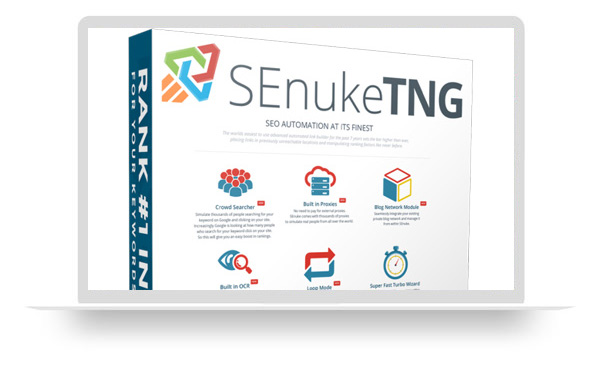
SEnuke TNG was the most popular backlink automation suite abroad in the 2010s, with its site at senuke.com. The old versions ran on Win7, Win8 and Win10, and almost everyone doing export SEO in China had a copy.
Its logic was link wheels plus bulk posting: the software registered accounts, scraped articles, spun them, then published to a dozen types of sites so those pages linked to each other and pushed authority toward the page you wanted to rank.
The modules usually mentioned are:
- Wiki module: posts with links to wiki-style sites
- WordPress module: bulk posts to sites built on WordPress
- PDF module: PDFs uploaded to document sites like Baidu Wenku
- Article Directory: submissions to article directories
- Web2.0 profiles, forum signatures, bookmarking sites: profile pages and short posts with links
- Press Release: news release distribution
- Pinger and RSS submission: pushes to get pages indexed
- Turbo Wizard: a one-click wizard that builds a project in 30 seconds
- Script module: custom workflows, close to Zennoposter
It also needed third-party paid services: captcha-solving accounts, article-spinning accounts and indexing services. Added up, these often cost far more than the software itself.
Does Google still reward automated links in 2026?
No. At Google I/O in May 2026, Google put AI Mode at about 1 billion monthly users, with AI Overviews answering directly above a large share of informational queries. Users read the answer and leave. Pew Research measured clicks on traditional results at about 8% when an AI summary appears, against about 15% when there is none.
The key point: rankings have not changed — only the shape of the results page has. AI simply summarizes pages that already rank. Google has said outright that getting into AI Overviews and AI Mode needs no extra structured data, special files or Markdown. Doing SEO well is doing GEO well.
An Ahrefs study from March 2026 found something new: of the URLs cited in AI Overviews, only 37.9% also appeared in the top 10 organic results for that query, and another 31% ranked outside the top 100. That sounds like “you can be cited without ranking,” but the precondition is that the page can be crawled, can be indexed, and is not blocked by tags like nosnippet. Junk pages generated in bulk by software fail at step one.
One more number to plan around: queries with an AI Overview see about a 34.5% drop in click-through to the first result. The position is still there, the traffic is not. That is the real environment in 2026.
Why 10,000 backlinks bring zero inquiries
Three reasons. Most published pages land on link farms, abandoned blogs and ownerless wikis that are not indexed themselves, so a link from them is worth nothing. Bulk automation also leaves obvious footprints: the same templates, the same batch of registration emails, the same publishing window. Google's spam link systems spot patterns like these easily. The most overlooked cost, though, is time.
A salesperson spends two weeks running one campaign. Those two weeks could have produced five product selection articles, ten real photos and follow-ups with 30 existing customers. Winning a new customer costs about 5 times what keeping an old one does. The math is simple.
| Approach | What it delivers in 2026 | Main risk | Who it suits |
|---|---|---|---|
| Bulk link software (SEnuke TNG and similar) | Most pages never get indexed; AI Overviews will not cite them | Domain demotion, sunk time | Not recommended |
| Manual links (industry sites, chambers of commerce, supplier directories) | Low volume, but the pages are real and indexable | Slow results, needs ongoing upkeep | Small and mid-size exporters |
| Content assets (spec sheets, selection guides, customer cases) | Cited by organic results and AI Overviews alike | Needs product and technical input | Factories with their own product lines |
Rows two and three are what is worth doing in 2026. Links are not dead — bulk links are.
Move your budget to three actions that bring inquiries
If you already run an export site, the conversion path on your B2B export website matters far more than backlinks. Fix these in order and you will see the data move within a week:
- Say who you are and what problem you solve within 3 seconds of the first screen. A buyer who cannot find those two sentences closes the tab.
- Add spec tables and MOQ to every product page. Pages with missing parameters get no inquiry — the buyer just asks the next supplier.
- Keep the form to three fields: name, email, requirement. More fields means a lower submit rate.
Only after these three should you talk about promotion. To pull traffic from Google, Google's five main advertising programs include free entry points you can start with now; if you do not have a site yet, lay the foundation first with website building services.
Site speed: miss INP at 200ms and content does not matter
The 2026 Core Web Vitals thresholds are LCP ≤ 2.5 seconds, INP ≤ 200 milliseconds and CLS ≤ 0.1. INP formally replaced FID in March 2024 and measures how long the page takes to respond after a user clicks. The three most common problems and their fixes:
- Hero image set as a CSS background-image: the browser has to parse the CSS before it even finds the image, which drags LCP down. Use an img tag with the fetchpriority=high attribute instead.
- Images with no fixed width and height: CLS goes straight over the line. This is the best-value fix of all — the whole site takes ten minutes.
- Third-party scripts stacked in the head: GA4, Meta Pixel, live chat, pop-ups — all INP killers. Delay them until the user's first interaction (touchstart, mousemove, keydown, scroll).
The page builder itself has a cost too. Ranked from worst to best for INP: Elementor, Divi, WPBakery, Beaver Builder, Bricks, GenerateBlocks, Kadence Blocks, native Gutenberg. One real case: a 30-page site moved from Elementor to Bricks, and INP fell from 290ms to 110ms while LCP went from 3.4 seconds to 1.9 seconds. The migration took about 16 hours. Cloudflare APO costs about $5 a month and caches HTML at the edge, pushing TTFB down to 30–80ms. That is a far better spend than link software.
Note that Core Web Vitals uses a rolling 28-day field data window, so changes take four weeks to appear in Search Console. Do not judge it the day after. On mobile, about 53% of users leave if loading takes more than 3 seconds. Before you build, check the version and pricing comparison and pick a plan that will not hold your speed back — cheaper than fixing it later.
Should you still build links? The safe approach in 2026
Yes, but differently. Twenty real, relevant links found by hand are worth more than 20,000 from software. Where to find them:
- Member directory pages of trade associations and chambers of commerce
- Partner pages on supplier and customer sites up and down your chain
- Exhibitor lists on trade show websites at home and abroad
- Brand pages on B2B platforms and product directory sites
- Links that appear naturally when peers cite your selection guides or industry data
The test is simple: the page is indexed by Google, it is relevant to your product, and an editor actually read your content. Miss any one of the three and the link means nothing. If your site is built around AI integrated marketing, pushing content and technical work forward together is steadier — see the build approach in AI integrated marketing websites.
FAQ
Can I still use SEnuke TNG today?
The software still runs on Win7, Win8 and Win10, and the modules are unchanged. But in 2026 almost every link it builds lands on a page that is not indexed. Those links bring no rankings, no inquiries, and carry demotion risk.
How do I start an export site without buying link software?
Make the first screen clear, add spec tables and MOQ to product pages, cut the form to three fields, then use Google's free tools to get your first traffic. Links only mean something once your content can be indexed.
Will AI Overviews steal my organic traffic?
They take a share. Pew measured click-through at about 8% with an AI summary versus about 15% without. But AI only summarizes pages that already rank — the ranking logic has not changed, and a good page is still the prerequisite.
My site loads slowly. What do I fix first?
Set fixed width and height on every image, switch the hero image to an img tag with fetchpriority=high, then defer chat and pixel scripts until after the user's first interaction. Those three steps fix most INP and CLS problems.