

To get inquiries on an export website, fix trust before you talk conversion. In 2026, buyers judge two things within 3 seconds of landing: is this a real company, and do you have what I need? State who you are, what you make and who you serve above the fold. Keep the form to name, email and requirement. Let certifications, real photos and load speed fill in the rest.
Why a Visitor Decides You Are a Real Company in 3 Seconds

Google's data is blunt: past 3 seconds on mobile, about 53% of users leave. The verdict lands before they ever see your product.
Export buyers follow a fixed path. First they check whether the first screen says who you are and what you solve. Then they open product pages for spec sheets and MOQ. Then they look at the factory on About Us. Only then do they decide whether to fill in the form. One blocked step and the inquiry is gone.

The original article's phrase 'assume initial skepticism' still holds in 2026. Most suppliers have no big brand behind them. Buyers treat you as a stranger and their first instinct is to guard against you. Design's job is to earn 20 more seconds of attention, not to close a sale.
The Trust Pyramid: Why You Cannot Ask for Email and Phone First
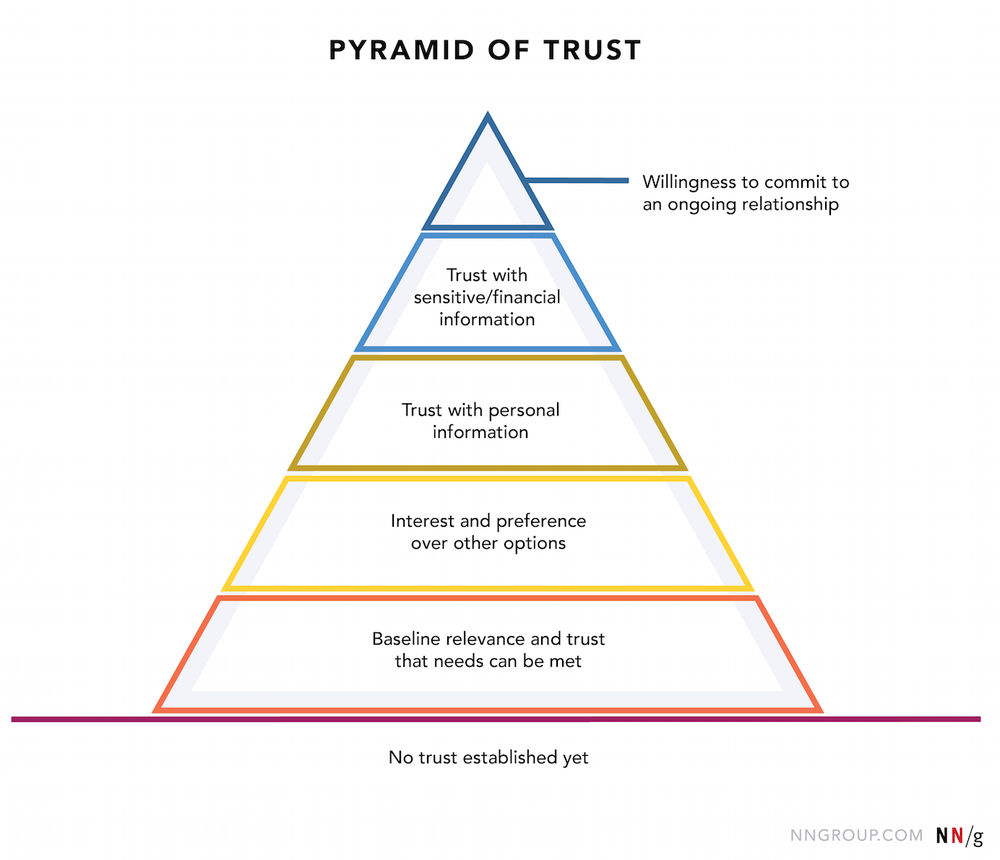
The trust pyramid from Nielsen Norman Group is about sequence: meet the most basic trust need first, then ask for deeper actions. Skipping levels rarely works.
Many sites open with a five-field form above the fold asking for phone, company name and purchase volume. The CTA gets ignored — the visitor has received nothing of value yet, so why hand over information?
Reverse the order. Give first: a spec sheet, a shop-floor video, a price range. Once they open a second page, ask for the email. Fewer fields always win. Name, email and requirement convert best; ask the rest during the email thread.
First-Screen Layout That Doesn't Look Like a Template
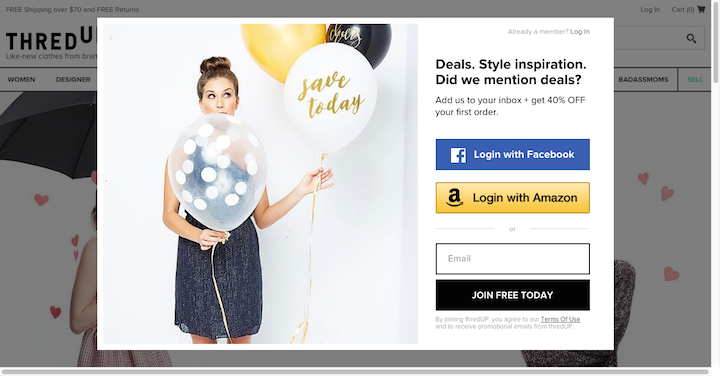
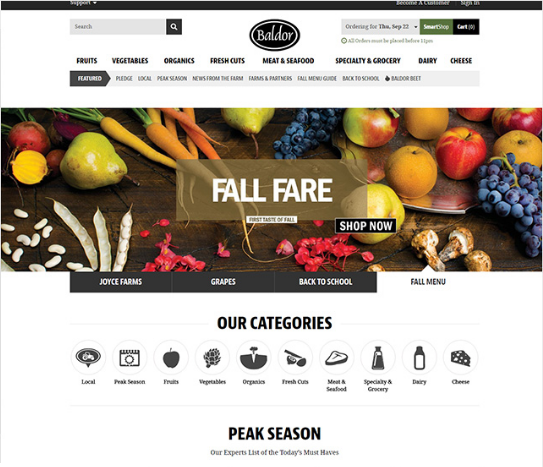
Design quality is the most direct trust signal. A tidy layout, restrained colors and sharp images make visitors assume the company is organized. A page with five or six colors, blurry photos and scattered buttons loses trust before a word is read.
Match the palette to the industry. Industrial parts suit low-saturation navy and gray; consumer goods can take brighter tones. Use one palette from top to bottom. More than three primary colors and the page falls apart.
Upfront disclosure is rarer. How shipping is calculated, whether sample fees are refunded, who pays duties — put it on the page instead of hiding it behind the form. Sites that lock every price behind a login wall add too much friction; many buyers quit at registration. If your business truly needs details to quote, a range still beats nothing.
6 Page Elements That Reassure Overseas Buyers (With Placement Table)
These are the easiest elements for an export site to add in 2026, and the ones that move inquiries most. Place them as shown — don't dump everything on the homepage.
| Trust element | Where it goes | What to do | Problem it solves |
|---|---|---|---|
| Workshop photos and equipment video | Homepage second screen, About Us | Shoot the production line and QC, no stock images | Shortens the 'is this a real factory' call |
| Certifications and test reports | Product pages, certifications page | Turn CE, ISO, RoHS reports into downloadable PDFs | Cuts back-and-forth emails for documents |
| Client logos and case studies | Homepage footer, industry solution pages | List brands you have worked with, note their industry | Lets new buyers find a peer reference |
| Third-party reviews | Homepage, product pages | Embed verifiable review displays | Praise that isn't self-declared |
| Price range and MOQ | Below the spec table on product pages | Give a range, not an exact quote | Filters out poorly matched inquiries |
| Sample and return policy | Quote page, FAQ | One paragraph on sample fees and refund terms | Lowers first-order hesitation |

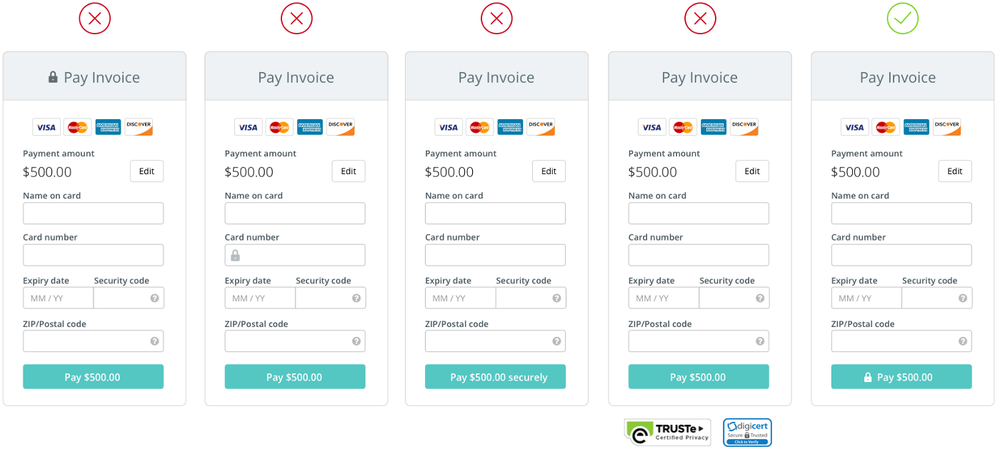
Awards, certifications and reviews aren't bragging — they're evidence. Before a buyer hands over a company name, an email or payment details, they need to see others already did. For a low-cost way to put reviews on the page, see embedding Google star rating badges on a WordPress site.
Not sure what you're missing? Open your competitors' sites. Analyzing competitor websites to improve your own gives you a checklist: list the trust elements on their first three screens and fill your gaps.
What AI Search Changed in 2026: Cited Pages Get Trusted More
Google announced at I/O 2026 in May: AI Mode has roughly 1 billion monthly users, and AI Overviews answer a large share of informational queries right at the top. A buyer's first contact may be a summary, not your homepage.
Pew Research's measurement is worth noting: when an AI summary appears, about 8% of users click a traditional result; without one, about 15%. Ahrefs' March 2026 study is blunter — of URLs cited in AI Overviews, only 37.9% also rank in the top 10 for that query (about 76% in July 2025), and another 31% rank beyond 100. Queries with AI Overviews see roughly a 34.5% drop in clicks on the top result.
The takeaway is not 'stop doing SEO.' Google says it plainly: getting into AI Overviews and AI Mode needs no extra structured data, special files or Markdown. Good SEO is good GEO. The test is still the same three things — crawlable, indexable, not blocked by nosnippet or max-snippet.
Rankings haven't changed; the results page has. AI just summarizes pages that already rank. Trust gains another layer: your page has to be citable before a buyer can see your claims in a summary.
Speed and SSL: The Invisible Cost of Trust
The 2026 Core Web Vitals thresholds: LCP ≤ 2.5s, INP ≤ 200ms, CLS ≤ 0.1. INP replaced FID in March 2024 and measures response after a click, not just loading.
The biggest INP killer is third-party scripts — GA4, Meta Pixel, TikTok Pixel, live chat, pop-ups. The common fix is delaying them until first interaction (touchstart, mousemove, keydown, scroll). For CLS, the cheapest move is hard-coding width and height on every image. Load the hero image with an img tag plus fetchpriority=high, not a CSS background — the browser has to parse CSS before it even finds the image, which drags LCP down.
On the server side, Cloudflare APO costs about $5/month and caches HTML at the edge, bringing TTFB down to 30–80ms. One real migration: a 30-page site moving from Elementor to Bricks went from 290ms to 110ms INP and 3.4s to 1.9s LCP, in about 16 hours of work.
And SSL. In 2026 it's table stakes. Chrome flags sites without it as 'Not secure', and inquiries are basically gone. Don't rush to check results after the fixes — Core Web Vitals uses a 28-day rolling window of real user data, so Search Console needs about 4 weeks to reflect it.
Do This Now: Export Website Trust Checklist

Hand this list to whoever owns the website and work through it in order. Most sites finish in one or two weeks.
- The first screen reads who you are, what you solve and which industry you serve — within 3 seconds.
- The hero image uses an img tag with fetchpriority=high, not a CSS background.
- Every image has fixed width and height to prevent layout shift.
- GA4, pixels and live chat load only after the first user interaction.
- Product pages carry a spec table and MOQ, with prices as a range.
- The form asks for name, email and requirement only.
- Certifications and test reports are downloadable and sit on product and certification pages.
- Company address, phone and email are visible in the footer — not just a form.
- SSL is enabled sitewide; no 'Not secure' warning in the address bar.
- Search Console confirms pages are crawlable and indexable, with no nosnippet restrictions.
If the site's structure is wrong to begin with — product pages missing specs, an About Us that's one paragraph, a mobile layout that falls apart — swapping a few elements won't help. That case calls for rebuilding around a B2B export website structure. Before you start, understand why your independent export site gets no traffic or inquiries — it saves a lot of rework.
FAQ
The site looks fine. Why are inquiries still low?
Usually it's not design but missing trust elements or a long inquiry path. Check whether the first screen says who you are, whether the form has more than three fields, and whether product pages carry specs and MOQ. If all three pass, look at traffic quality.
Do customer reviews on the homepage help?
Yes, if they can be verified. Screenshots of nice comments you picked yourself convince little. Third-party reviews that link to their source are more credible. One block under the hero and one on product pages is enough — filling the whole site looks staged.
Must product pages show prices?
Not exact quotes, but a range. Export prices move with quantity, material and process, so hard numbers create trouble. A starting quantity and a price band filter out mismatched inquiries and keep serious buyers talking.
How long does it take to rebuild a site with better trust?
It depends on page count and whether content migrates. For a 30-page marketing site, a few weeks from structure sign-off to launch. Compare plans and pricing first, lock the budget and scope, then schedule.