

The right order for keyword work on an export site in 2026 is: first define the words that bring inquiries, then work backwards to pages. At Google I/O in May 2026, Google reported that AI Mode has about 1 billion monthly active users, and that AI Overviews answer informational queries right at the top. Pew Research measured it: when an AI summary appears, users click traditional results about 8% of the time. Pick the wrong words and your page never even gets the chance to be summarized by AI.
Are keywords still worth doing in 2026? Start with what AI search changed
Google's own line is blunt: getting into AI Overviews and AI Mode needs no extra structured data, special files or Markdown. "Good SEO is good GEO." Keyword research is not dead. The criteria just changed.
What changed is the shape of the results page. Ahrefs research from March 2026 shows that only 37.9% of URLs cited in AI Overviews also appear in the top 10 organic results for that query (about 76% in July 2025), and another 31% rank outside the top 100. In January 2026, AI Overviews switched to the Gemini 3 model, which crawls a wider range.
What has not changed is the underlying logic: AI only summarizes pages that already rank. Your page has to be crawlable, indexable, and free of nosnippet or data-nosnippet restrictions before it can even be cited. Keywords still decide where you rank and who gets summarized.
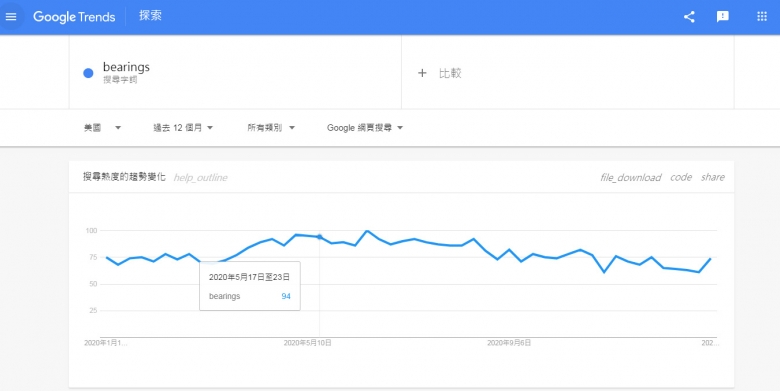
Step 1: Copy the words your customers use, don't guess
Don't open a tool yet. Go through the last three months of inquiry emails, WhatsApp chats, business card notes from trade shows, and repeat-order emails from old clients. Copy the full sentences customers use to describe your product into one sheet. The phrasing your sales team uses every day is usually what people actually search.
I've seen an industrial parts site where customers kept writing "replacement for" a certain model, not the official catalog name. Run phrases like that through a tool and you often open up a cluster of low-volume, high-precision-intent keywords.
Getting 30–50 candidate phrases together before you touch a tool is far more efficient than wandering inside one from scratch. For splitting keywords by buying stage in B2B, see how to do keyword research for B2B. It still applies.
Choosing tools: four free sources are enough for one round
Free tools cover most of what you need to decide. What you pay for is speed, not answers. Here are four sources in the order you would use them:
| Source | What you get free | Main use | Watch out |
|---|---|---|---|
| Google Trends (trends.google.com) | Relative interest and related terms for a country and time range | Judge seasonality and regional demand differences | Relative values only, no absolute search volume |
| Google Search Console | Impressions, clicks, average position and query list for your own site | Find words already ranking 11–30 and optimize those first | You must verify the site first; see Search Console beginner's guide |
| keywordtool.io | Long-tail suggestion lists for a given term (free version) | Expand long tails; compare wording on Google, YouTube and Bing | Search volume data is paid |
| Google Autocomplete + Related searches | Real user phrasing | Correct the gap between official names and colloquial terms | Manual cleanup and de-duplication needed |
You don't need many tools. Pick two or three and stick with them. More free options are in 19 free Google SEO tools, but don't switch your stack for every article you write.
Three layers of keywords: head terms, long tails, inquiry terms
Layer your list by function so page planning later doesn't fall apart. The test is simple: what stage of buying is the searcher at?
- Head terms: broad product category names, such as stainless steel fitting. Higher volume, tougher competition. Put them on the homepage or category pages. One head term per category.
- Long-tail terms: modifiers for material, spec and application. Lower competition, faster rankings. Put them on product detail pages and blog posts.
- Inquiry terms: words with supplier, manufacturer, OEM, wholesale, price or MOQ. Low volume, but the searcher is already looking for a supplier. Put them on product pages and dedicated landing pages.
- Regional terms: a head term plus a country or city, built into regional landing pages. Don't just swap the place name.
With limited budget and people, prioritize inquiry terms and long tails. Use head terms to hold the site hierarchy together.
How to judge whether a keyword is low-competition and worth doing
Search the term in an incognito Google window and look at who is in the top 10. If more than half are B2B marketplace directory pages and big distributors, a new site won't break in soon. If most are thin, years-stale small factory sites, you have a shot.
The second check is in Search Console: keywords where a page already ranks 11–30 deserve the most investment. They show Google already trusts your relevance. You just need content and internal links to push. For how ranking factors weigh against each other, see Google's latest ranking algorithm: which ranking factors matter most.
The third is intent. Ahrefs data shows the number one result loses about 34.5% of its click-through rate on queries with an AI Overview. Purely informational terms (what is, how to) get heavily intercepted by AI Overviews. Use them for blog credibility, not inquiries. Leave commercial terms for product pages.
One keyword, one page: it's not done until it's in your site structure
Once you pick a keyword, pin it to a single URL. Two pages competing for the same term usually both lose. Do these four things in one pass when you build the page:
- The title tag, H1 and the first 100 words of the intro carry the core term and its variants naturally. No stuffing.
- Product pages need a spec table and MOQ. Say "who you are + what you solve" within 3 seconds above the fold. Keep forms to three fields: name, email, requirement.
- Set fixed width and height on every image to control CLS. Use an img tag with fetchpriority="high" for the hero image. Good is LCP ≤ 2.5s, INP ≤ 200ms, CLS ≤ 0.1. About 53% of mobile users leave if a page takes more than 3 seconds to load.
- Use anchor text internally: head terms to category pages, long tails to product pages, so the hierarchy stays clear.
After launch, review it monthly in Search Console to see if the term entered the top 10 and whether impressions are climbing. For overall cadence, follow the ultimate guide to Google SEO. The "Search generative AI" toggle in Search Console opens to everyone by August 31, 2026 and defaults to include, so you can see AI-driven impressions right there.
FAQ
How many keywords should one page target on an export site?
One. There is a single core term; the rest are variants and long-tail expressions. If you want two unrelated terms to rank, build two pages.
The tool shows very low search volume. Is it still worth it?
Look at intent. Terms with supplier or manufacturer can bring real inquiries at a few dozen searches a month. Purely informational terms can have high volume and still deliver few clicks once AI Overviews intercept them.
In 2026, do I need to optimize specifically for AI Overviews?
No extra technical steps. Google has said plainly that no special structured data is required. Make the page crawlable, indexable and clearly argued, and you are doing SEO and AI citation at once.
Should a new site start with long tails or head terms?
Long tails first. Lower competition, faster results, and they build topical relevance and internal links. Six months later, use those rankings to attack the head terms.