

Competitor analysis is still worth doing in 2026, but the goal has changed. You're not copying keywords. You're finding the pages your rivals get cited for in AI Overviews. Google says it plainly: appearing in AI Overviews needs no extra structured data — good SEO is good GEO. So this analysis should end in three places: content gaps, backlink sources and page speed.
Do competitor sites still matter now that AI Overviews eat the clicks?
Yes, but read them differently. Pew Research measured it: when an AI summary sits above the results, users click a traditional result about 8% of the time. Without one, about 15%. Ahrefs data shows the number one result loses roughly 34.5% of its clicks on queries with an AI Overview. Fewer clicks doesn't mean rankings stopped mattering.
The key point is this: rankings haven't changed — the results page has. AI simply summarizes pages that already rank. Google also states clearly that AI Overviews and AI Mode need no special structured data and no extra files. Whether you can be cited comes down to one thing: the page is crawlable, indexable, and not restricted by nosnippet or data-nosnippet.
Ahrefs' March 2026 study gives a more useful signal. Of the URLs cited in AI Overviews, only 37.9% also appear in the top 10 organic results for that query — down from about 76% in July 2025. Another 31% of cited pages rank outside the top 100. The conclusion is clear: a passage that answers the question directly gets lifted more often than a beautifully structured long article. When you review a competitor's site, start with the passages AI pulled.
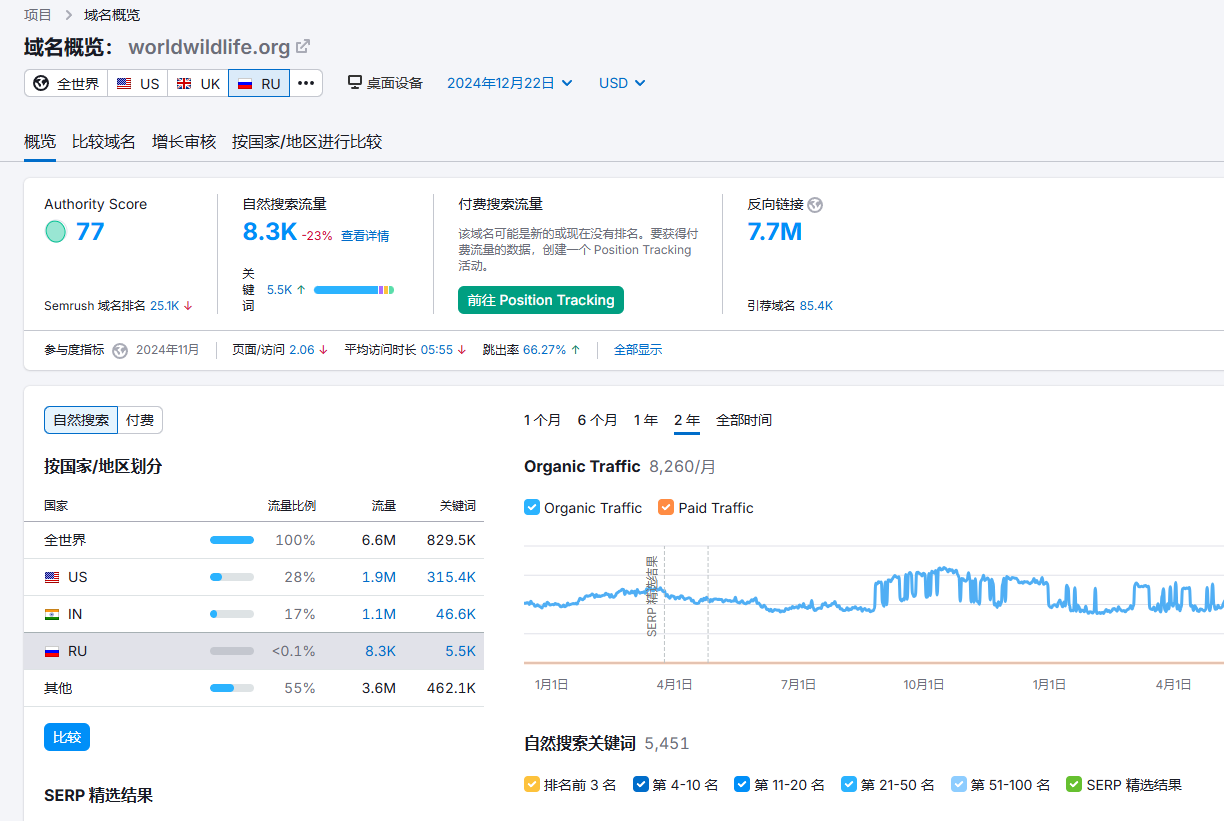
Which 5 dimensions should you analyze in 2026?
It's not about quantity. Each dimension has to map to a change you can make the same day. Foreign-trade sites run on small teams, so this table is enough.
| Dimension | What to look at | Common tools | What you can change directly |
|---|---|---|---|
| SEO and ads | Organic-to-paid traffic ratio, bid keywords, ad copy style | Semrush, Ahrefs | Ad group structure, landing page titles |
| Traffic quality | Time on site, bounce rate, pages per visit | SimilarWeb, Search Console | Say who you are and what you solve in the first three seconds |
| Content | Update frequency, article structure, whether there are question-and-answer passages | sitemap.xml, site search | Topic list, paragraph structure |
| Backlinks | Number and type of referring domains, anchor text distribution | Ahrefs, Majestic | Guest post shortlist, partnership list |
| Page experience | Mobile load speed, whether images have fixed width and height | PageSpeed Insights, CrUX | LCP hero image, CLS fixes |
If you can't get through it all, cut. A site with fewer than 30 inquiries a month should go deep on content first — that beats watching five dimensions at once. Tool data is never exact; algorithms and data sources differ. When two tools disagree, trust the actual search results.
How do you pick tools? 5 data sources small export teams can actually use
- Search Console: your own site, free. Queries, click-through rates and page experience data all live here. It's the baseline you check competitor data against.
- Ahrefs or Semrush: competitor keyword rankings, referring domains and traffic trends. Subscribe to one — two will blur your view.
- SimilarWeb free version: only look at traffic mix and channel share. Treat the numbers as reference, not conclusions.
- sitemap.xml and robots.txt: a free content map of any competitor. You can see how many product pages and article pages they have, and whether they update weekly or monthly.
- PageSpeed Insights: run it on their homepage and product page. Their LCP and CLS problems jump right out.
Search Console's Search generative AI toggle opens to everyone by August 31, 2026, with include as the default. Once that panel goes live, you'll see which of your own pages appear in AI results — far easier than reverse-engineering competitors.
How do you turn competitor keyword and content gaps into your own topic list?
Export the keyword list from your tool and run it through four steps. What comes out is a brief you can hand to a writer.
- Filter out keywords unrelated to your product. Keep only what buyers search during purchasing — terms with specs, use cases, “supplier” or “MOQ”.
- Flag keywords where a competitor ranks in the top 10 and you haven't written anything. Those are content gaps.
- Then look at keywords where competitors rank 11 to 30 and the content is still thin. Those are positions you can take directly.
- Give each keyword one question that can be answered in a single sentence. That's your title, and the answer goes in the first paragraph.
AI Mode has about 1 billion monthly users (announced at Google I/O 2026), so the share of informational queries absorbed by summaries will keep rising. At least half your topic list should be the exact question a buyer asks — “What's your MOQ?”, “How long is the lead time?”, “Can you do OEM?” — not “industry trends for X”. For how to write this kind of content, see using ChatGPT to write articles and product descriptions.
Can you take a competitor's backlinks? How?
Yes, but sort them by type — don't grab everything. Three kinds are easiest to copy: guest posts on industry blogs, association and chamber of commerce directories, and trade show media pages. Export a competitor's referring domains, drop directories and forum signatures, and what's left is your pitch list.
The output of backlink analysis isn't “how many links the competitor has”. It's an email-ready list, each entry with a contact, a section and a reference article. Authority sites in your industry are worth two months of outreach. Bulk directory sites aren't worth a single link.
For screening criteria and negotiation scripts, see how to get competitor backlink resources. For pacing and placement, the ultimate guide to English backlinks for foreign trade breaks it down further.
After the analysis, what should you fix on your own site first?
Page experience delivers results fastest. The 2026 good thresholds are LCP ≤ 2.5s, INP ≤ 200ms and CLS ≤ 0.1. INP officially replaced FID in March 2024. If mobile load time passes 3 seconds, about 53% of users leave. Serve the hero image with an img tag and fetchpriority="high", not a CSS background-image. Hard-code width and height on every image and CLS is basically handled. Third-party scripts like GA4, Meta Pixel and live chat are the biggest INP killers — defer them until after the user's first interaction.
One real migration worth citing: a 30-page site moved from Elementor to Bricks, INP dropped from 290ms to 110ms and LCP from 3.4s to 1.9s. The migration took about 16 hours. Don't check results right away — Core Web Vitals uses a 28-day rolling window of real user data, so it takes 4 weeks to show up in Search Console.
Match your product pages to competitors' spec tables and fill in MOQ, lead time, certifications and packaging. Keep the inquiry form to three fields — name, email, requirement. That converts best. For the overall structure of a B2B showcase site, see B2B foreign trade websites. If traffic and inquiries are already thin, finish the diagnosis first and work through why your foreign trade site has no traffic or inquiries item by item. Don't skip the basics either — Chrome flags sites without SSL as “Not secure”, and that kills inquiries.
FAQ
Do I have to use paid tools to analyze competitor sites?
Not necessarily. Search Console, sitemap.xml and PageSpeed Insights are all free. Use those three well and you'll solve most content and speed problems. On a tight budget, subscribe to just one of Ahrefs or Semrush, specifically for keywords and backlinks.
How many competitors should I analyze at once?
Three to five. Too few and you can't see patterns; too many and you drown in data. Pick two types: direct competitors ranking above you, and newer sites that started recently but publish fast.
How often should I review the analysis?
Keywords and backlinks quarterly; page speed and content gaps every six months. Google's algorithms and AI result formats move fast — AI Overviews switched to Gemini 3 in January 2026 — and a slow cadence will leave you behind.
If I write to a competitor's keywords, will I be flagged for duplicate content?
No. Duplicate content means copying whole passages. Keywords themselves aren't copyrighted. Take the same topic and rewrite it with your own product cases, factory photos and customer questions, with the answer in the first sentence of each paragraph. That's what gets cited.